


Jiang Hanchen
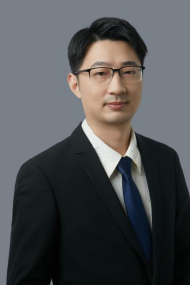
Jiang Hanchen, born in 1992, is an Associate Professor in School of Government, University of International Business and Economics. He received his Bachelor degree in Hydraulic Engineering from Tsinghua University in 2013 and his Ph.D. in Management Science and Engineering from Tsinghua University in 2019. He was a postdoctoral researcher in School of Public Policy and Management, Tsinghua University, and a visiting scholar in University of California, San Diego, USA. His research interests include digital government, and computational social sciences. He has published more than 30 papers in PAR, JPART, PA, Governance, PMR, Information Systems Research, and other Chinese or international journals. His research work has been supported by National Natural Science Foundation of China and China Postdoctoral Science Foundation. He participated in two projects granted by National Natural Science Foundation of China. He was a Shuimu fellow in Tsinghua University and won the excellent Ph.D. dissertation of Tsinghua University.
Research interests
Digital governance, Citizen-state interaction, Computational social science
Contact information
Address: Room 906, Qiusuo Building, School of Government, University of International Business and Economics, Beijing, China
Telephone: 18801301146
Email: jhc09@qq.com/03174@uibe.edu.cn
Education
Tsinghua University, Management Science and Engineering, Ph.D. (2013/09 - 2019/07 )
University of California, Department of Economics, Visiting Ph.D. student (2016/ 10 - 2017/09)
Tsinghua University, Hydraulic Engineering, Bachelor (2009/09 - 2013/06)
Working Experience
Tsinghua University, School of Public Policy and Management, Post-doctoral researcher (2019-2022)
University of International Business and Economics, School of Government, Lecturer (2022-2024)
University of International Business and Economics, School of Government, Associate Professor (2024-)
Teaching
Public Policy and Economic Development (Ph.D. students), Global Governance (Ph.D. students), International Strategic Management (Undergraduates)
Awards
1. Shuimu fellowship, Tsinghua University (2020)
2. Excellent Ph.D. dissertation, Tsinghua University (2019)
Publications
1.Jiang, H. (2026). Beyond Psychological Costs: How Negative Bureaucratic Encounters Influence Citizens' General Psychological Well-Being. Public Administration Review, Online First.
2.Jiang, H., Zhang, C., & Zhang, J. (2026). Top managers’ language dissimilarity and public organizational performance. Journal of Public Administration Research and Theory, 36(1), 99-113.
3.Chen, X., & Jiang, H. (2025). Bridging trust through institution and process: how does digital government increase citizens’ trust in local government?. Public Management Review, 1-26.
4.Jiang, H., Yi, H., & Zhang, D. (2025). Historical Persistence of Meritocratic Selection on Citizen Compliance. Governance, 38(4), e70070.
5.Zhang, D., Jiang, H., Qiang, M., Zhang, K., & Qiu, L. (2025). Time to Stop? An Empirical Investigation on the Consequences of Canceling Monetary Incentives on a Digital Platform. Information Systems Research, 36(2), 781-801.
6.Deng, Z., Jiang, H.*, Fan, B., & Tang, X. (2025). Balancing act: How do local governments use social media in crises?. International Public Management Journal, 28(3), 425-446.
7.Chen, X., Jiang, H.*, & Ling, J. (2024). Addressing multitasking problems through promotion incentives: An empirical study of local governments in China. Public Performance & management review, 47(3), 654-680.
8.Zhang, D., Jiang, H.*, & Qiang, M. (2023). Public attitudes toward hydropower in China: The role of information provision and partisan identification. Technological Forecasting and Social Change, 195, 122800.
9.Jiang, H., & Tang, X. (2023). Effects of local government social media use on citizen compliance during a crisis: Evidence from the COVID‐19 crisis in China. Public administration, 101(3), 843-864.
10.Jiang, H., & Zhang, M. (2021). Online information adoption about public infrastructure projects in China. Journal of Cleaner Production, 310, 127527.
11.Xia, B., Qiang, M., Jiang, H., Wen, Q., An, N., & Zhang, D. (2020). Phase-based externality analysis for large hydropower projects. Environmental impact assessment review, 80, 106332.
12.An, N., Qiang, M., Wen, Q., Jiang, H., & Xia, B. (2019). Contribution of project managers’ capability to project ending performance under stressful conditions. European Management Journal, 37(2), 198-209.
13.Jiang, H., Qiang, M., Fan, Q., & Zhang, M. (2018). Scientific research driven by large-scale infrastructure projects: A case study of the Three Gorges Project in China. Technological Forecasting and Social Change, 134, 61-71.
14.Jiang, H., Qiang, M., Zhang, D., Wen, Q., Xia, B., & An, N. (2018). Climate change communication in an online q&a community: A case study of quora. Sustainability, 10(5), 1509.
15.Zhang, D., Qiang, M., Jiang, H., Wen, Q., An, N., & Xia, B. (2018). Social sensing system for water conservation project: a case study of the South-to-North Water Transfer Project in China. Water Policy, 20(4), 667-691.
16.Xia, B., Qiang, M., Chen, W., Fan, Q., Jiang, H., & An, N. (2018). A benefit-sharing model for hydropower projects based on stakeholder input-output analysis: A case study of the Xiluodu Project in China. Land use policy, 73, 341-352.
17.Jiang, H., Qiang, M., Lin, P., Wen, Q., Xia, B., & An, N. (2017). Framing the Brahmaputra River hydropower development: different concerns in riparian and international media reporting. Water Policy, 19(3), 496-512.
18.Jiang, H., Qiang, M., & Lin, P. (2016). Assessment of online public opinions on large infrastructure projects: A case study of the Three Gorges Project in China. Environmental Impact Assessment Review, 61, 38-51.
19.Jiang, H., Qiang, M., & Lin, P. (2016). A topic modeling based bibliometric exploration of hydropower research. Renewable and Sustainable Energy Reviews, 57, 226-237.
20.Jiang, H., Qiang, M., & Lin, P. (2016). Finding academic concerns of the Three Gorges Project based on a topic modeling approach. Ecological indicators, 60, 693-701.
21.Jiang, H., Lin, P., & Qiang, M. (2016). Public-opinion sentiment analysis for large hydro projects. Journal of Construction Engineering and Management, 142(2), 05015013.
22.Jiang, H., Lin, P., Qiang, M., & Fan, Q. (2015). A labor consumption measurement system based on real-time tracking technology for dam construction site. Automation in Construction, 52, 1-15.
23.Qiang, M., Wen, Q., Jiang, H., & Yuan, S. (2015). Factors governing construction project delivery selection: A content analysis. International Journal of Project Management, 33(8), 1780-1794.
24.江汉臣, 卢樱丹, 唐啸. 政策宣介中“借鉴发达国家经验”能够提高公众政策支持吗?——以房产税政策为例. 公共行政评论, 2022, (2), 115-132.
25.张东成, 强茂山, 江汉臣, 黄钰洁.大型工程安全隐患管理协作特征挖掘. 清华大学学报(自然科学版), 2022, 62(02): 208-214
26.孙明豪, 强茂山, 江汉臣, 康延领. 西藏小型水电站开发阻碍因素. 水利经济, 2021, 39(02): 77-81+98.
27.强茂山, 江汉臣. 数字化驱动:项目管理深度创新的引擎. 项目管理评论, 2018(02): 16-18.
28.强茂山, 张东成, 江汉臣. 基于加速度传感器的建筑工人施工行为识别方法. 清华大学学报 (自然科学版), 2017, 57(12), 1338-1344.
29.江汉臣,林鹏,强茂山. 基于实时定位系统的监理人员管理和评价. 清华大学学报(自然科学版), 2015, 55(09), 950-956, 963.
30.江汉臣,邓晓梅,强茂山. 建筑市场业主和承包商行为策略演化博弈分析. 建筑经济, 2015, 36(08), 97-101.
31.江汉臣, 强茂山. 四种项目管理成熟度模型的比较研究. 项目管理技术, 2013, (7), 17-22.
32.袁尚南, 强茂山, 温祺, 江汉臣. 基于模糊层次分析法的建设项目组织效能评价模型. 清华大学 学报 (自然科学版), 2015, 55(6), 616-623.
33.强茂山, 温祺, 江汉臣, 袁尚南. 建设管理模式匹配关系及其对项目绩效的影响. 同济大学学报(自然科学版), 2015, 43(1), 0160-0166.
Research grants
National Natural Science Foundation: Digital government construction, user evaluation, and public
satisfaction: An empirical study for local governments in China
Chinese Postdoctoral Science Foundation: public participation in environmental governance in the age of social media
Academic services
Reviewers for Technovation, International Journal ofPublic Administration, Humanities and Social
Sciences Communications, Human Ecology, Water Resources Management, Ecological Indicators, Journal ofHydrology, Automation in Construction
You are welcome!
Students and friends who are interested in computational social science, digital governance, and citizen-state interactions are welcome to contact with me.